Between 19 – 21 January 2026, the world experienced a large solar storm linked to a X1.9 solar flare and a large, unusually fast Coronal Mass Ejection (CME) – travelling at around 1600 km/s, which put it in the top 5% of CMEs for speed! It was the second biggest geomagnetic storm since 2003, only beaten by the storm in May 2024, and it reached us around 9 hours earlier and with greater power than forecast. It reached extreme storm levels, rated G4 by NOAA. It was also associated with an extreme radiation storm, rated at S4 by NOAA on a scale that goes up to S5. This level of radiation is important for satellites and GPS, but did not affect power grids.
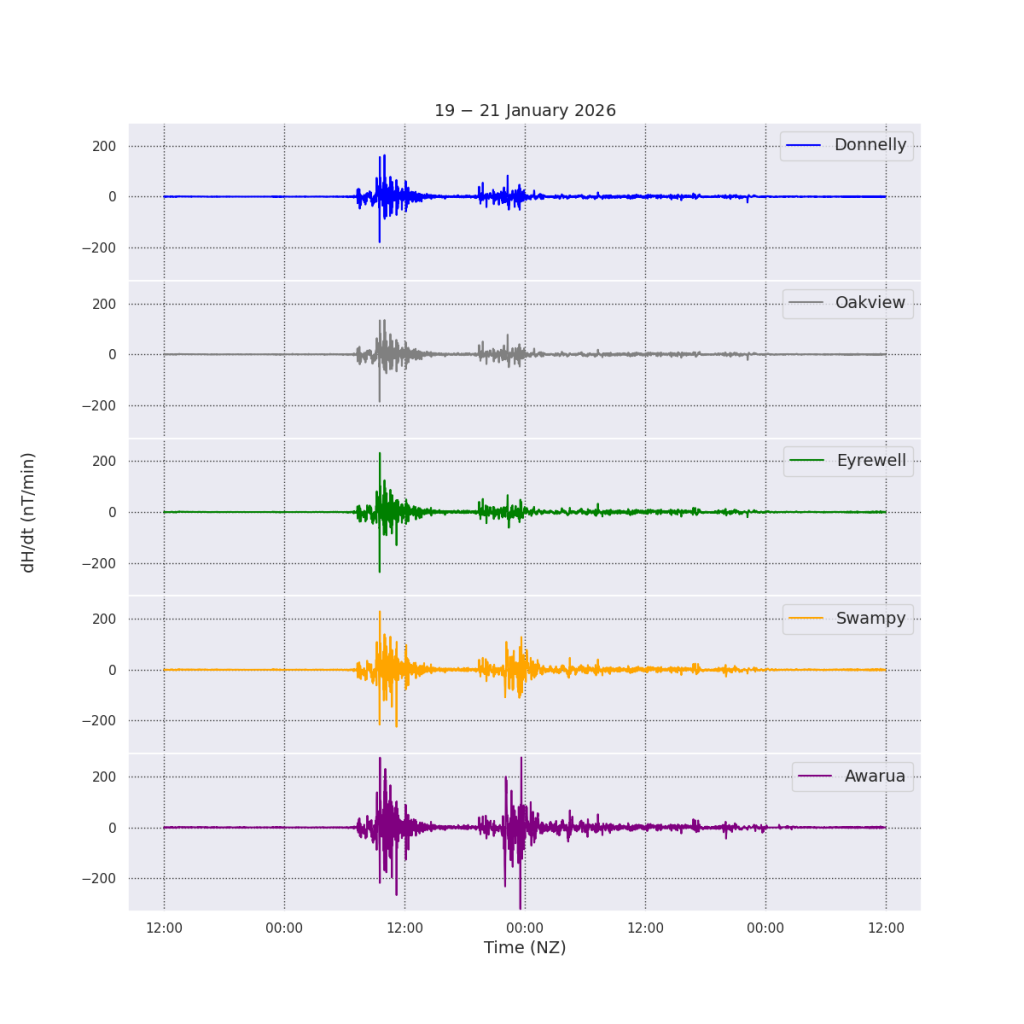
Measurements of the magnetic field were captured at the magnetic observatory at Eyrewell and across our MANA network. The peak measurement of 236 nT/min at Eyrewell and 327 nT/min at Awarua were the second highest at each site since 1994.
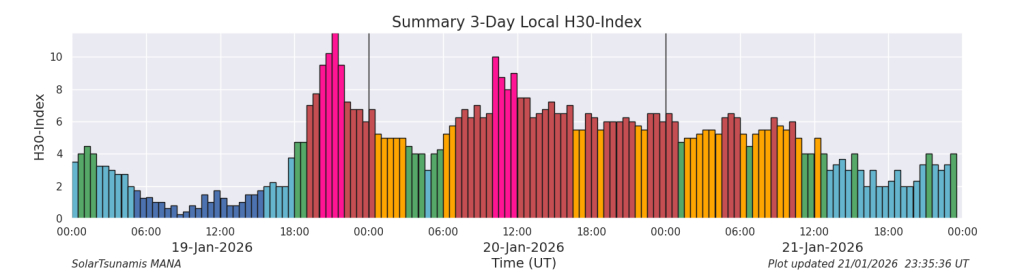
Another measure of the storm’s severity is the H30 index. This is similar to the Planetary K index calculated using 3-hour measurements from ground-based magnetometers around the world; however, the H30 index is calculated using 30 minute measurements, in this case locally in New Zealand. It has no upper limit (unlike the K index). A pink bar represents H30 at 8 or above, meaning a severe storm is occurring and indicating that auroras are visible to the eye across New Zealand. The first pink band occurred during the daytime, but the second band was at night (although many New Zealanders missed out on good views due to cloud cover). Awarua in particular experienced large localised activity due to a geomagnetic substorm. New Zealand observed higher H30 levels than the global average.
During this storm, New Zealand also experienced the largest Geomagnetically Induced Current ever seen in our power grid; however, the reason it was so large was because the storm wasn’t big enough to activate mitigation plans, unlike the storm in May 2024. Consumer electricity supply wasn’t affected.
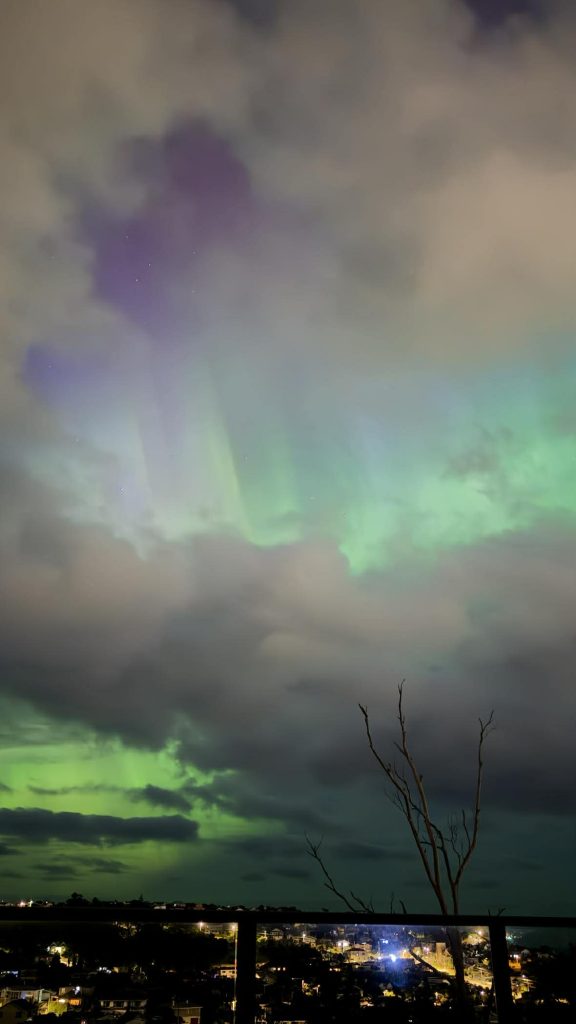
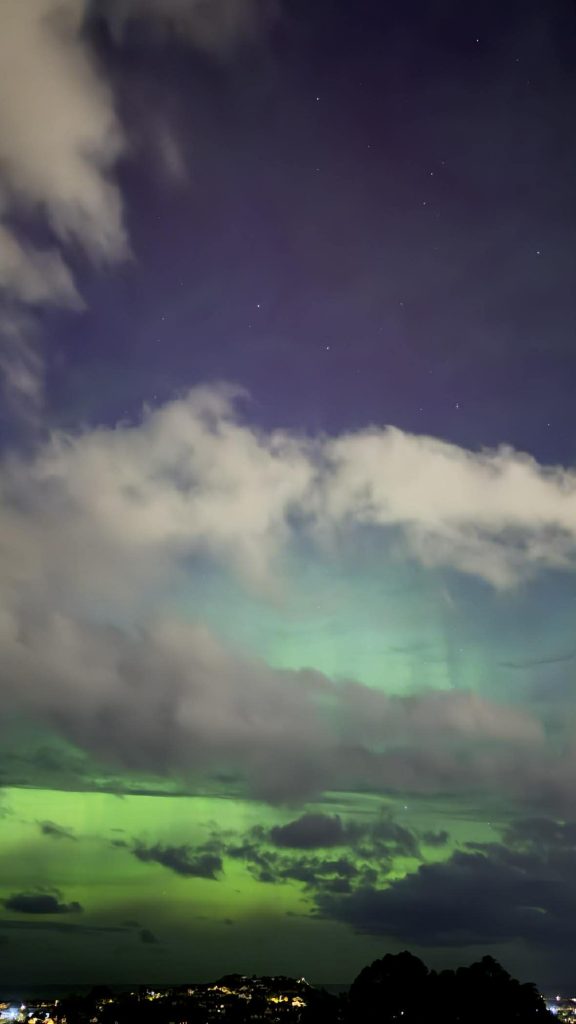
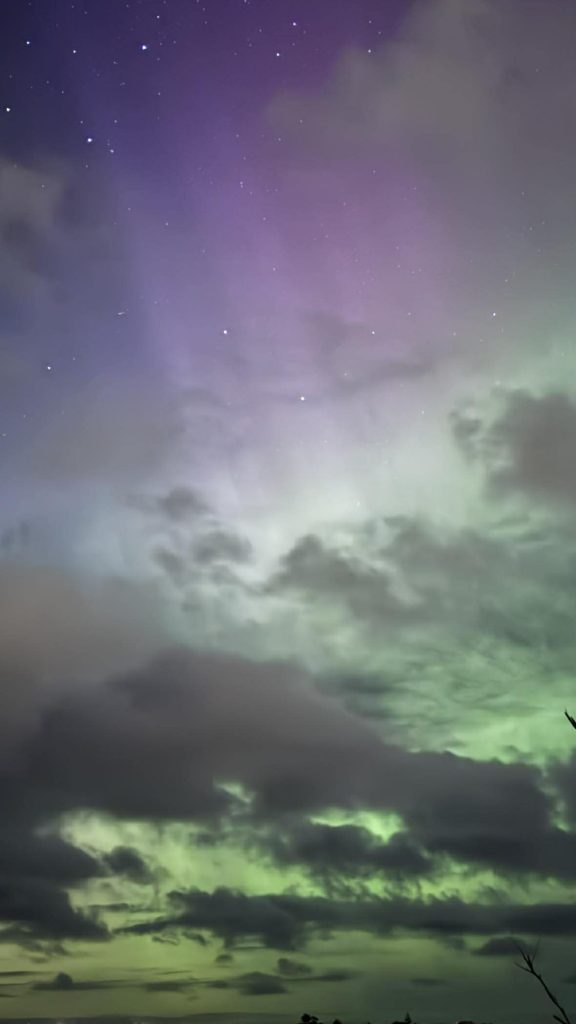
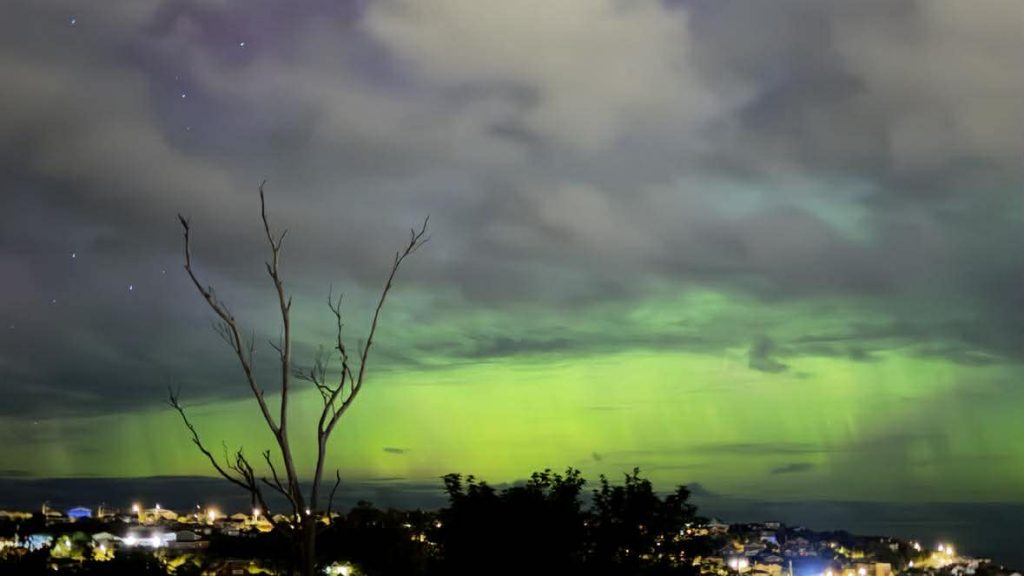
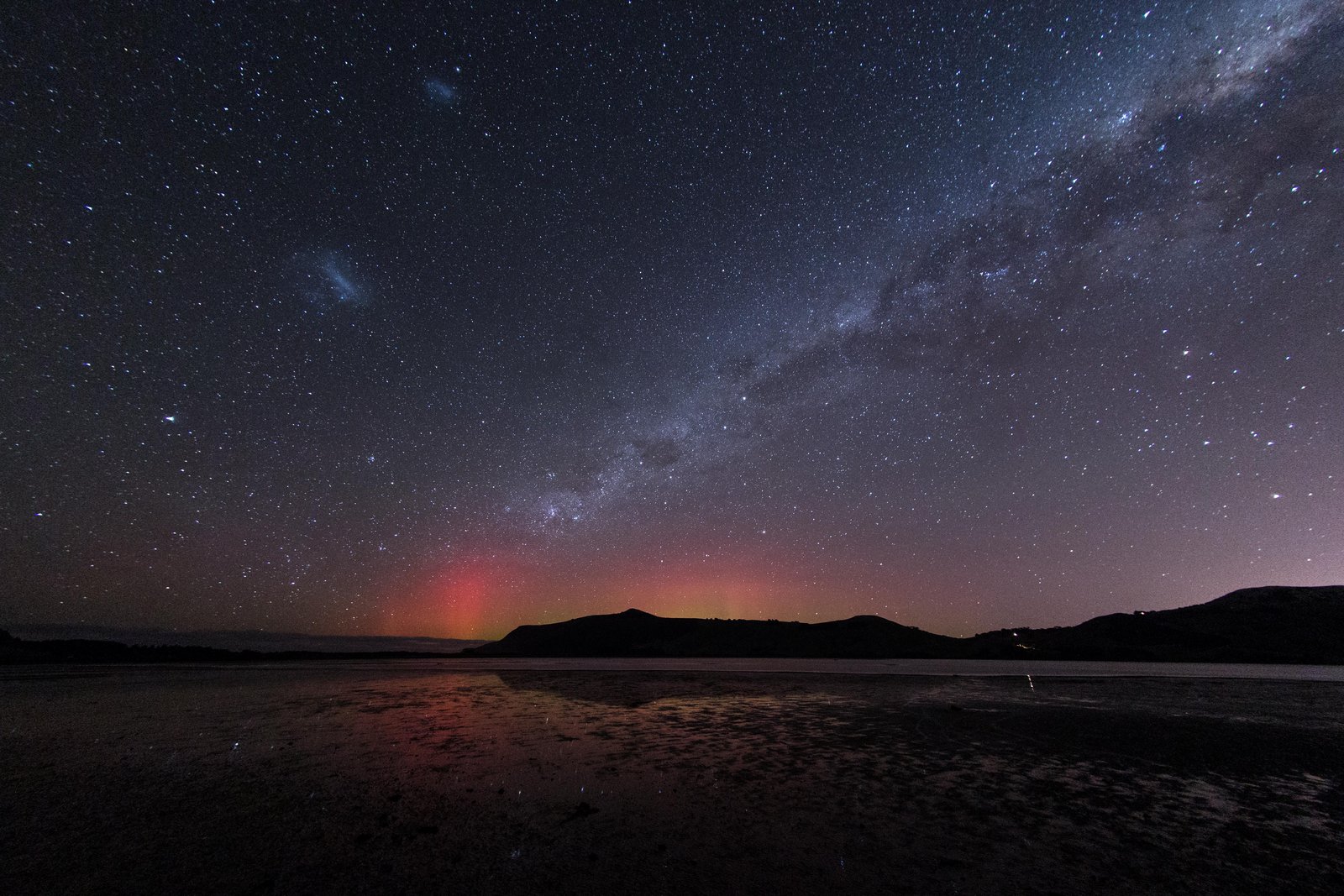
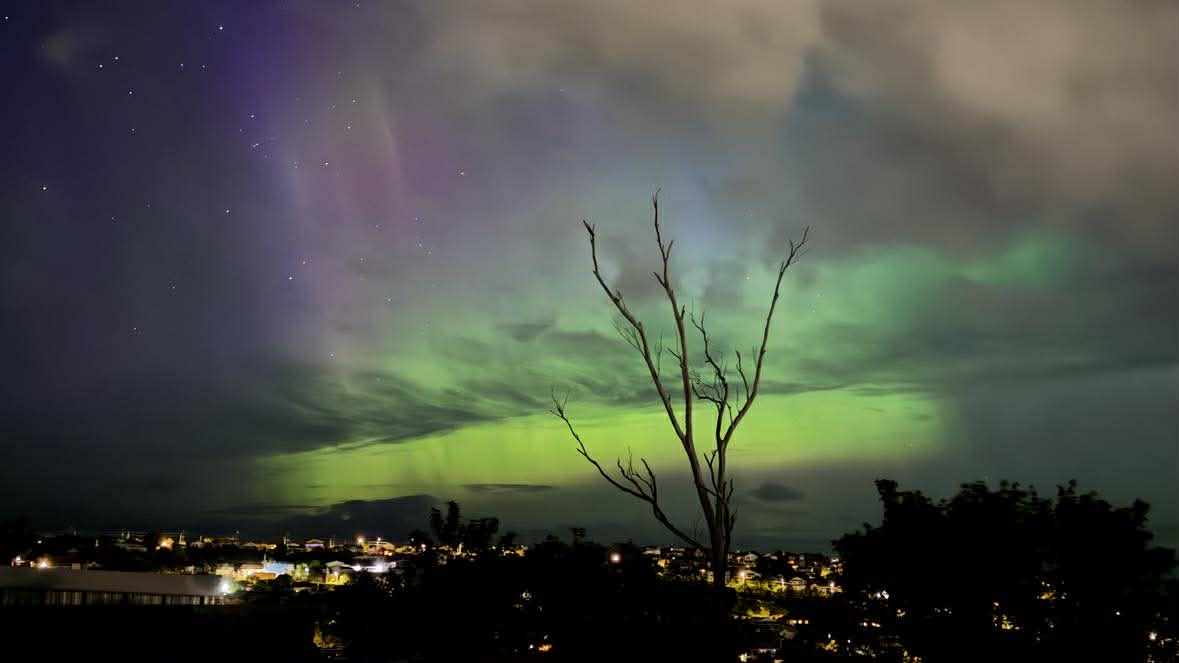
Dunedin was blanketed in cloud, like many other locations around New Zealand that night, so our team didn’t manage to take any good photos of the storm. However, a friend sent these photos taken from Waverley after midnight when the clouds cleared enough to see it.
Above and below: Photos of the aurora through the clouds courtesy of Chad Benham.